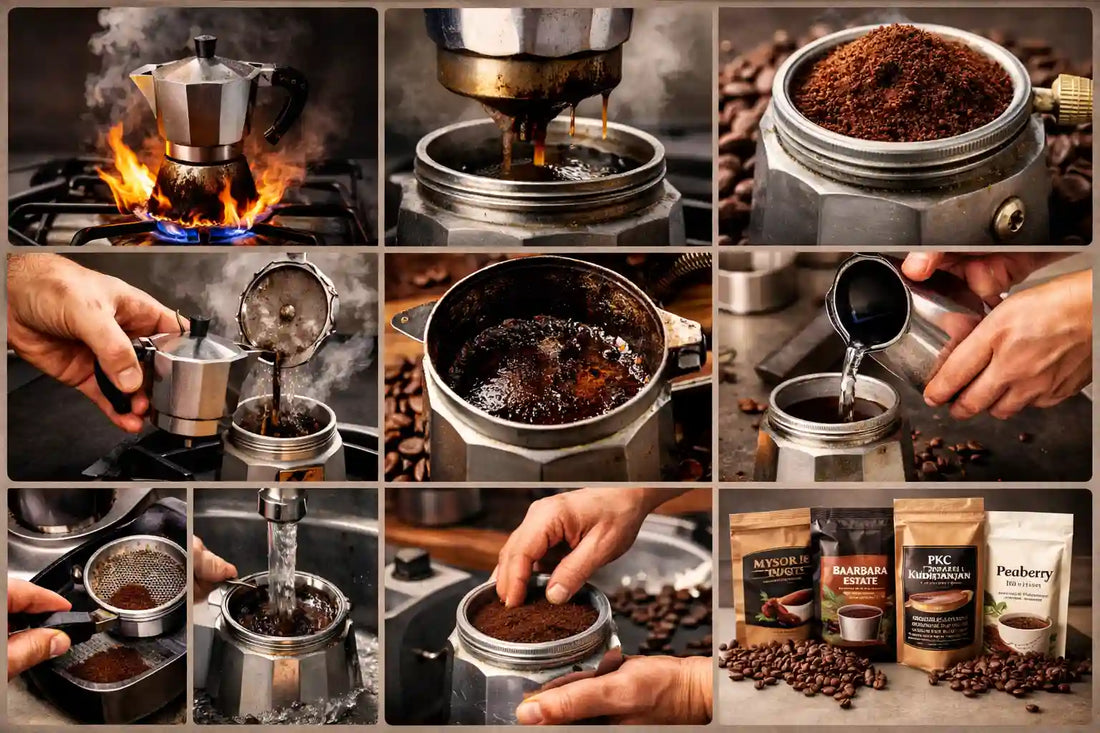
Why Is My Moka Pot Coffee Tasting Burnt?
You know that smell. The one that hits you mid-brew — sharp, acrid, slightly metallic — when your moka pot is doing something it definitely shouldn't be doing.
And then the taste confirms it. Burnt. Harsh. Almost ashy. Nothing like the rich, bold coffee you were hoping for.
Here's the frustrating part: a moka pot is one of the simplest coffee makers in existence. No electricity, no settings, no complicated parts. Just water, heat, and coffee. So why does it keep producing something that tastes like it came out of a car engine?
The answer is almost always one of a handful of specific, fixable problems. Let's go through every single one.
First — What's Actually Happening When Moka Pot Coffee Burns?
Before we fix it, it helps to understand what's going wrong.
A moka pot works by heating water in the bottom chamber until steam pressure builds up and forces the water upward through the coffee grounds and into the top chamber. The whole process takes 4–6 minutes on a good brew.
Burnt coffee happens when the coffee grounds are exposed to too much heat for too long — either because the heat is too high, the process is too slow, the water runs out before all the coffee has been extracted, or the finished coffee sits on heat after brewing. Any one of these can scorch your grounds and ruin the cup.
The good news: every single cause is fixable. Let's start with the most common one.
Reason 1: Your Heat is Too High

This is the number one cause of burnt moka pot coffee — and the one most people don't think to question because surely, more heat = faster brewing = fresher coffee, right?
Wrong. More heat = scorched grounds = burnt coffee.
The moka pot is designed to brew at a slow, steady pace. When you crank the heat up, you're pushing water through the grounds too aggressively and too fast. The water is also hotter than it should be by the time it reaches the coffee, which over-extracts the bitter, burnt compounds.
The fix: Use medium-low heat. Always. This feels counterintuitive but it's the single most impactful change you can make. Your brew should take 4–6 minutes, not 2. If it's done in under 3 minutes, your heat is too high.
On a gas stove, the flame should be small enough that it doesn't lick up the sides of the moka pot — just heating the base. On an induction or electric hob, start at medium and drop to low once you hear the first gurgle.
Reason 2: You're Leaving It on the Heat After It's Done

Here's something a lot of people don't realise: the brewing isn't over just because the coffee has moved to the top chamber. If you leave the moka pot on the heat after it's finished brewing, the remaining water in the bottom chamber continues to heat — and the steam continues to push through the now-dry, overcooked grounds.
That final 20–30 seconds of unnecessary heat is often what's burning your coffee.
The fix: Listen for the change in sound. When your moka pot shifts from a low, steady gurgling to a louder, sputtering, hissing noise — that's the signal that the bottom chamber is nearly empty and brewing is finishing. At that point, take it off the heat immediately.
Even better: take it off the heat just before it finishes, and let the residual heat complete the brew. This is a small habit change that makes a big difference.
Some people also run the bottom of the moka pot under cold water the moment they take it off the heat — this immediately stops any further extraction and prevents the last of the coffee from over-brewing as it pushes through.
Reason 3: Your Grind Is Too Fine

Moka pots need a specific grind — finer than pour over or French press, but coarser than espresso. If your grind is too fine, water struggles to push through the densely packed grounds, which means it stays in contact with the coffee longer than it should, extracting bitter, harsh compounds along the way.
Fine grinds also increase the risk of the safety valve triggering — which is a sign that pressure is building too high because water can't flow through easily.
The fix: Aim for a medium-fine grind — finer than table salt but coarser than powdered sugar. If you're using pre-ground coffee labelled "espresso grind," it may actually be too fine for a moka pot. Try going one step coarser and see if it improves.
If you're grinding at home, adjust your grinder slightly coarser than your espresso setting. The difference between a good moka pot grind and an over-extracted one is often just one or two clicks on your grinder.
Reason 4: You're Packing the Coffee Too Tightly

This one catches people out because it feels wrong — surely more coffee packed in tighter makes a stronger, better cup?
What it actually does is slow the water flow significantly, which creates the same over-extraction problem as too fine a grind. If you're tamping your moka pot grounds the way you would an espresso puck — pressing firmly — stop. That's not how a moka pot is meant to work.
The fix: Fill the basket level with ground coffee and give it a gentle tap on the counter to settle the grounds. That's it. No tamping, no pressing down, no extra packing. The grounds should sit loose and even in the basket, just filled to the top without overflowing.
Also make sure the basket rim is clean before screwing on the top chamber — even a small amount of grounds on the rim can affect the seal and cause uneven extraction.
Reason 5: You're Starting With Cold Water

When you fill the bottom chamber with cold water and put the moka pot on the heat, the grounds sit in the basket for several minutes before the water is even hot enough to start moving. During this time, the heat from below gradually warms the basket too — essentially pre-cooking your coffee before extraction even begins.
This slow pre-heating of the grounds is a subtle but real contributor to burnt, harsh flavour — especially on higher heat settings.
The fix: Start with hot water. Fill the bottom chamber with water that's already hot — from a kettle or from the tap if your hot water is genuinely hot. This dramatically shortens the time the grounds spend sitting over heat before brewing actually starts, reducing the chance of scorching.
Some moka pot enthusiasts swear by boiling water from the kettle. Others use water that's just off the boil. Either way, starting hot is significantly better than starting cold.
Use a towel or oven mitt to handle the bottom chamber when filling with hot water — the metal heats quickly.
Reason 6: Your Moka Pot Needs Cleaning

Old coffee oils are bitter. They accumulate on the inside of the basket, the filter plate, the gasket, and the walls of both chambers over time. Every new brew passes through this layer of rancid oil before reaching your cup.
If your moka pot has a dark, oily residue on the inside — and you haven't cleaned it properly in a while — that's contributing to the bitter, burnt flavour even when your technique is perfect.
The fix: Clean your moka pot thoroughly. Disassemble it completely — top chamber, bottom chamber, basket, filter plate, and rubber gasket. Wash everything with warm water and a soft brush or cloth. Avoid dish soap if possible, as it can strip the seasoning from older aluminium pots, but for a very dirty pot a mild soap wash is better than leaving the residue.
Pay particular attention to the filter plate with the small holes at the bottom of the top chamber — old grounds and oils collect there and are easy to miss.
After cleaning, do one brew with cheap coffee and discard it before using your good beans — this removes any cleaning residue and re-seasons the pot.
Reason 7: Your Moka Pot Is Too Large for the Amount You're Making

Moka pots come in sizes — 1 cup, 2 cup, 3 cup, 6 cup, and so on. They're designed to be filled to capacity, not partially. If you have a 6-cup moka pot but only fill it halfway, the pressure dynamics change — water moves through the grounds unevenly, and the half-empty top chamber causes the coffee to sit longer over heat.
The fix: Always fill your moka pot to its intended capacity, or buy a smaller one that matches your brewing needs. If you regularly make one or two cups, a 2-cup moka pot gives you far better results than a 6-cup used at half capacity.
Reason 8: Your Coffee Beans Are Old or Low Quality

You can fix every single one of the above problems and still get burnt-tasting coffee if your beans aren't good. Here's why.
Fresh, high-quality coffee has natural sweetness and complexity that balance out the bold, intense extraction of a moka pot. Stale or low-quality coffee has lost those balancing compounds — what remains is predominantly bitter, harsh, and flat. In a moka pot, which extracts intensely, these flaws get amplified rather than hidden.
The moka pot is actually a very honest brew method. It doesn't forgive poor raw material the way, say, adding milk to a cappuccino might. The quality of your beans shows up clearly in the cup.
If you've fixed your technique — lower heat, correct grind, no over-packing, clean equipment — and the coffee still tastes harsh and burnt, your beans are almost certainly the problem.
The fix: Upgrade your beans. Specifically, look for:
- Fresh-roasted beans with a roast date within the last 2–4 weeks (not just an expiry date 18 months away)
- Medium to medium-dark roast — these extract most reliably in a moka pot and produce the rich, chocolatey cup the method is known for
- Specialty grade — beans that have been quality-scored and sourced from specific estates, not commodity blends
The Best BrewClan Coffees for Your Moka Pot
Since the moka pot produces bold, concentrated, espresso-adjacent coffee, the beans that work best are medium to medium-dark roasts with natural sweetness, low acidity, and rich body. Here are our top picks:
🥇 Best Overall: Mysore Nuggets

Tasting Notes: Chocolate, Nutty, Cocoa | Roast: Medium-Dark | ~ ₹699
Mysore Nuggets was practically made for a moka pot. The medium-dark roast, low acidity, and full chocolatey body translate perfectly into the bold, concentrated extraction that a moka pot produces. You get deep cocoa richness, warm nuttiness, and a smooth, lingering finish — without any bitterness, as long as your technique is dialled in.
This is the coffee we'd recommend to anyone who loves a strong, classic morning cup from their moka pot. It's also our most consistently reviewed coffee — 4.9 stars from 183 people.
☕ Best for Milk Drinks: Baarbara Estate Washed AA

Tasting Notes: Nutty, Cocoa, Brown Sugar | Roast: Medium-Dark | ~ ₹699
If you use your moka pot to make café-style drinks — adding steamed or frothed milk to create a homemade latte or cappuccino — the Baarbara Estate Washed AA is your bean. The brown sugar sweetness and cocoa depth hold up beautifully against milk without getting lost or turning bitter.
Grown at 1350–1500 MASL on Baarbara Estate, this high-altitude washed coffee has a natural clarity and balance that makes it one of the most versatile in our lineup. 5 stars from 27 reviews.
→ Buy Baarbara Estate Washed AA
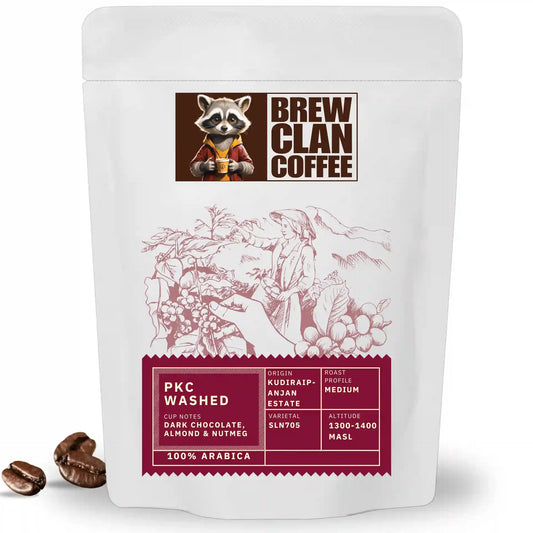
🍫 Best for Complexity: PKC Kudiraipanjan Estate Washed

Tasting Notes: Dark Chocolate, Almond, Nutmeg | Roast: Medium | ~ ₹749
If you want your moka pot coffee to actually taste like something interesting rather than just strong and dark, try the PKC Kudiraipanjan Estate Washed. The medium roast and washed process give it clarity and nuance — dark chocolate depth, almond smoothness, and a surprising nutmeg warmth at the finish.
It requires slightly more attention to technique than a medium-dark roast (lower heat, slightly coarser grind), but the reward is a genuinely complex, café-quality cup from a simple stovetop brewer.
→ Buy PKC Kudiraipanjan Washed
🍬 Best for Sweet, Gentle Cups: Peaberry from Hosahalli Estate

Tasting Notes: Brown Sugar, Overall Sweet | Roast: Medium | ~ ₹549
Not everyone wants intense, bold moka pot coffee. If you prefer something smoother and naturally sweet — especially if you're making moka pot coffee to drink black without sugar — the Peaberry from Hosahalli Estate is a wonderful choice.
The unique rounded shape of peaberry beans roasts more evenly, producing a consistently sweet, mild cup with brown sugar warmth and a clean finish. At ₹549, it's also our most accessible price point.
Quick Guide: Moka Pot Beans at a Glance
| Coffee | Flavor | Roast | Best For | Price |
|---|---|---|---|---|
| Mysore Nuggets | Chocolate, Cocoa, Nutty | Medium-Dark | Classic bold morning cup | ₹699 |
| Baarbara Washed AA | Cocoa, Brown Sugar, Nutty | Medium-Dark | Milk-based moka drinks | ₹699 |
| PKC Kudiraipanjan | Dark Chocolate, Almond, Nutmeg | Medium | Complex, flavourful cup | ₹749 |
| Peaberry | Brown Sugar, Sweet | Medium | Smooth, sweet black coffee | ₹549 |
The Perfect Moka Pot Brew: A Quick Checklist
Before your next brew, run through this:
- ✅ Start with hot water in the bottom chamber
- ✅ Use medium-low heat — not high
- ✅ Fill the basket level, no tamping
- ✅ Grind medium-fine — not espresso fine
- ✅ Take it off the heat the moment it starts sputtering
- ✅ Run the base under cold water to stop extraction
- ✅ Moka pot is clean with no old oil residue
- ✅ Beans are fresh-roasted, medium to medium-dark roast
Fix all eight and you'll have a completely different cup.
Related reads:
- Why Is My Espresso Shot Sour, Bitter or Weak?
- What "Specialty Grade" Actually Means — And How to Spot It
All BrewClan coffees are specialty grade, small-batch roasted, and shipped fresh across India. Free delivery on all orders.
→ Shop the Best Coffee Beans for Moka Pot
Frequently Asked Questions
Why does my moka pot coffee taste burnt even on low heat?
If you're already on low heat but the coffee still tastes burnt, check your grind size (may be too fine), your water level (never fill above the safety valve), and whether the pot needs a thorough clean. Old coffee oil residue causes persistent burnt flavour regardless of heat level.
Should I use boiling water in a moka pot?
Starting with hot or near-boiling water is generally better than cold — it reduces the time grounds spend pre-heating over the flame. However, full boiling water from a kettle works well for most people. The key is that lower heat during brewing still applies.
How fine should I grind coffee for a moka pot?
Medium-fine — finer than drip or pour-over, but noticeably coarser than espresso. If your shot takes under 3 minutes, go coarser. If it takes over 7 minutes, go finer.
Can I use dark roast coffee in a moka pot?
You can, but very dark roasts are already carrying bitter compounds from the roasting process itself — which get amplified in a moka pot's intense extraction. Medium-dark roasts give you bold, strong coffee without the harshness of a very dark roast.
How often should I clean my moka pot?
Rinse it with warm water after every use. Do a full disassembly and thorough clean every 1–2 weeks depending on how often you brew. Replace the rubber gasket once a year or when it starts looking cracked or compressed — a worn gasket affects pressure and extraction quality.
Why does my moka pot make a loud sputtering noise?
A loud, aggressive sputtering at the end of the brew means either the heat is too high or the bottom chamber is running empty. Both push steam through dry grounds and burn the coffee. Reduce heat and take the pot off before this happens.