
What "Specialty Grade" Actually Means, And How to Spot It
Share
Walk into any supermarket today and you'll find the word "specialty" on at least a dozen coffee bags. Premium. Artisan. Single Estate. Reserve. The labels have multiplied faster than anyone can keep up with.
Here's the problem: most of those bags have nothing to do with actual specialty coffee. They're regular commercial coffee in better-looking packaging, sold at a higher price to people who don't yet know the difference.
This guide will change that. By the end, you'll know exactly what specialty grade means, how it's measured, what separates it from commercial coffee — and how to spot it (and spot the fakes) before you buy.
The Official Definition — And Why It Actually Means Something
"Specialty coffee" isn't just a marketing term. It has a precise, internationally recognised definition set by the Specialty Coffee Association (SCA) — the global authority on coffee quality standards.
Here's how it works:
Coffee is evaluated by trained, certified tasters called Q Graders — think of them as sommeliers for coffee. They score each lot on a 100-point scale across multiple attributes: aroma, flavour, aftertaste, acidity, body, balance, uniformity, cleanliness, sweetness, and overall impression.
A coffee must score 80 points or above to be classified as specialty grade.
That's it. That's the line. Below 80 is commercial grade — what fills most supermarket shelves. Above 80 is specialty. The best lots in the world score 90+.
This scoring system matters because it's objective and rigorous. It can't be gamed with a nice label. Either the coffee passes or it doesn't.
The 100-Point Scale: What Each Tier Means
| Score | Classification | What It Means |
|---|---|---|
| 90–100 | Outstanding | World-class; rare and exceptional lots |
| 85–89 | Excellent | High-end specialty; remarkable complexity |
| 80–84 | Very Good | Specialty grade; distinct and clean |
| 75–79 | Good | Above average commercial; no specialty claim |
| Below 75 | Commercial/Commodity | Mass-market coffee |
Most of what you find in supermarkets sits between 60–75. Most coffee sold as "premium" without any third-party certification sits between 70–79. Real specialty starts at 80.
What Q Graders Actually Look For
The cupping process (the formal tasting method used to score coffee) evaluates ten specific attributes:
Fragrance/Aroma — How does the dry ground coffee smell? How does it smell when hot water hits it?
Flavour — The full sensory impression of the cup: sweetness, fruit, chocolate, floral, spice — whatever the bean expresses.
Aftertaste — Does the flavour linger pleasantly after you swallow, or does it disappear immediately or turn bitter?
Acidity — Not sharpness or sourness, but the quality and liveliness of the acidity. Think of the bright, clean feeling of biting into a fresh apple versus the harsh sting of vinegar.
Body — The weight and texture of the coffee in your mouth. Is it light and tea-like, or full and velvety?
Balance — Do all the elements — acidity, sweetness, body, flavour — work together harmoniously?
Uniformity — Across five cups from the same lot, is the flavour consistent?
Cleanliness — Is the cup free from off-flavours, mustiness, ferment defects, or anything that shouldn't be there?
Sweetness — Natural sweetness from the bean, not added sugar. Does it have a pleasant, intrinsic sweetness?
Overall — The Q Grader's holistic assessment of the coffee's quality and character.
Each attribute is scored out of 10, with the total adding to 100. A coffee earning 80+ across all ten categories is genuinely exceptional — and that's before it even reaches a roaster.
What Separates Specialty from Commercial Coffee
The difference between specialty and commercial coffee isn't just quality — it's the entire chain of decisions that produces the cup in your hands.
1. Cherry Selection
Specialty coffee starts with selectively hand-picked cherries — only the perfectly ripe ones, at the right moment. Commercial coffee often uses strip harvesting, where everything — ripe, unripe, overripe — gets pulled off the branch at once. Underripe cherries cause sourness. Overripe causes ferment defects. Mixed harvests produce inconsistent, lower-scoring lots.
2. Processing Care
How coffee is processed after harvest dramatically affects flavour. Specialty producers use carefully controlled washed, natural, or honey processes — with attention to fermentation time, drying conditions, and moisture levels. Commercial coffee is processed quickly and efficiently, prioritising volume over nuance.
3. Defect Tolerance
The SCA has strict limits on how many defective beans a specialty lot can contain. A single primary defect — a black bean, a sour bean, a pod — and the lot fails. Commercial coffee tolerates far more defects because they'll be masked by dark roasting.
4. Traceability
Specialty coffee is traceable. You know the estate, the region, the varietal, the altitude, the processing method, and often the harvest date. Commercial coffee is typically a blend from multiple anonymous sources, designed to taste consistent rather than distinctive.
5. Roasting Philosophy
Specialty roasters roast to highlight what's in the bean — its natural origin character. Commercial roasters often roast dark to hide defects and create uniformity. Dark roasting essentially burns off the nuanced flavours and leaves behind a dominant roast taste — which is why all dark-roasted commercial coffees start to taste similar.
6. Freshness
Specialty coffee is sold and consumed close to the roast date — ideally within 2–6 weeks. Commercial coffee often sits in warehouses for months before reaching shelves, losing volatile flavour compounds the whole time.
How to Spot Real Specialty Coffee Before You Buy
Now the practical part. Here's what to look for — and what to be suspicious of.
✅ Signs of Real Specialty Coffee
Roast date on the bag (not just a "best before" date) Specialty roasters list when the coffee was roasted, not just when it expires. A "best before" date of 18 months tells you nothing useful. A roast date of 3 weeks ago tells you everything.
Single origin with specific estate information Real specialty coffee names the estate or farm, the region, the varietal, and the altitude. Not just "South India Arabica" — that's a commercial descriptor. Look for specifics like "Kudiraipanjan Estate, Shevaroy Hills, Yercaud, Tamil Nadu, SLN705 varietal, 1300–1400 MASL."
Processing method mentioned Washed, natural, honey — these terms indicate a producer who cares about how the coffee was handled. If the bag doesn't mention processing, it's probably commercial.
Cup notes that are specific and genuine Real specialty coffee has flavour notes that actually taste like something distinct — peach, green apple, dark chocolate, nutmeg. If a bag says "rich and smooth" or "bold flavour," that's marketing, not tasting notes. Every coffee is "rich and smooth" according to its own packaging.
Small batch roasting Large-scale industrial roasting sacrifices consistency and freshness. Look for roasters who mention small-batch production — it signals that quality, not volume, is the priority.
A price point that reflects reality Genuinely specialty-grade green coffee costs significantly more to source than commercial commodity coffee. If a bag claims to be specialty but is priced like instant coffee, be skeptical. Real specialty in India typically starts around ₹500–600 for 250 grams and goes up from there depending on the lot's rarity and processing.
🚩 Red Flags That Signal Commercial Coffee in Specialty Packaging
No roast date — only a "best before" or "expiry" date. Stale coffee doesn't care about its expiry date.
Vague origin — "100% Arabica from the finest estates" means nothing. Which estates? Where? What varietal? Arabica is a species, not a quality guarantee.
"Blend" without disclosure — blending isn't inherently bad, but if the blend sources aren't disclosed, you can't evaluate the quality.
Dark roast everything — a roaster who only offers dark roasts is either hiding defects in the beans or catering to mass-market taste. Specialty roasters offer a range of roast profiles because different coffees have different optimal roast points.
Generic flavour language — "smooth," "bold," "rich," "premium." These words describe nothing.
Suspiciously low price with specialty claims — sourcing and roasting genuine specialty coffee has real costs. Impossibly cheap "specialty" coffee is almost always misleading.
Indian Specialty Coffee: What You Should Know
India produces genuinely world-class specialty coffee — and it remains one of the most underappreciated coffee origins globally. The combination of high altitude growing regions, diverse microclimates, and a tradition of shade-grown cultivation creates conditions for exceptional beans.
Key regions producing specialty-grade coffee in India:
Coorg (Kodagu), Karnataka — India's largest coffee-growing region. High altitude, rich soil, produces both Arabica and Robusta. Some of the most complex Indian coffees come from here.
Chikmagalur, Karnataka — Home to the legendary Bababudangiri hills, where coffee was first planted in India. Produces elegant, nuanced Arabicas.
Shevaroy Hills, Yercaud, Tamil Nadu — Lesser known but producing exceptional specialty lots, including the PKC Kudiraipanjan Estate that we source from.
Araku Valley, Andhra Pradesh — Tribal-grown, high-altitude specialty coffee gaining international recognition.
Wayanad, Kerala — Lush, biodiverse growing conditions producing distinctive specialty lots.
What makes Indian specialty coffee particularly interesting is the diversity of processing methods now being explored — from traditional washed lots to experimental natural and honey processes, and even innovations like whiskey barrel aging and thermal shock fermentation.
The BrewClan Standard: What We Mean When We Say Specialty
Every coffee we source and roast at BrewClan meets the SCA's specialty grade threshold. We don't use the word loosely. Here's what it means in practice for every bag we sell:
Traceable to a single estate — you know exactly where your coffee came from, down to the specific farm and region.
Specific varietal and altitude — because these details shape the flavour, and you deserve to know them.
Detailed processing information — washed, honey, natural, or something more experimental like thermal shock fermentation or whiskey barrel aging.
Genuine cup notes — not marketing language, but flavours that are actually there in the cup.
Small-batch roasted — every lot is roasted to a profile that brings out its specific character, not to a standard commercial formula.
Freshly shipped — we roast to order and ship quickly. Your beans arrive at peak freshness, not after months in a warehouse.
Here's a quick look at what that means across our current lineup:
| Coffee | Estate | Process | Cup Notes | Roast |
|---|---|---|---|---|
| Mysore Nuggets | C&T Estate | Washed | Chocolate, Nutty, Cocoa | Medium-Dark |
| Baarbara Washed AA | Baarbara Estate | Washed | Nutty, Cocoa, Brown Sugar | Medium-Dark |
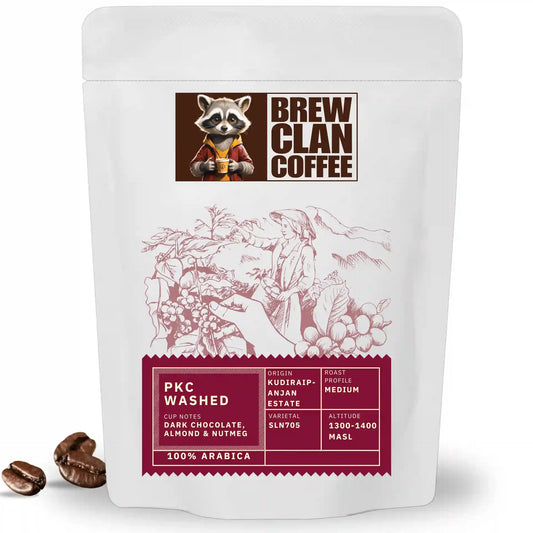
| PKC Kudiraipanjan | Kudiraipanjan Estate, Yercaud | Washed | Dark Chocolate, Almond, Nutmeg | Medium |
| Peaberry | Hosahalli Estate | Washed | Brown Sugar, Sweet | Medium |
| C&T Yellow Honey | C&T Estate | Yellow Honey | Pear, Peach, Walnut | Medium-Light |
| Unnaki Yellow Honey | Unnaki Estate | Yellow Honey | Berry, Apple, Grapefruit | Light |
| Udayagiri Whiskey Barrel | Udayagiri Estate | Barrel-Aged | Green Apple, Fermented Fruits, Black Tea | Medium |
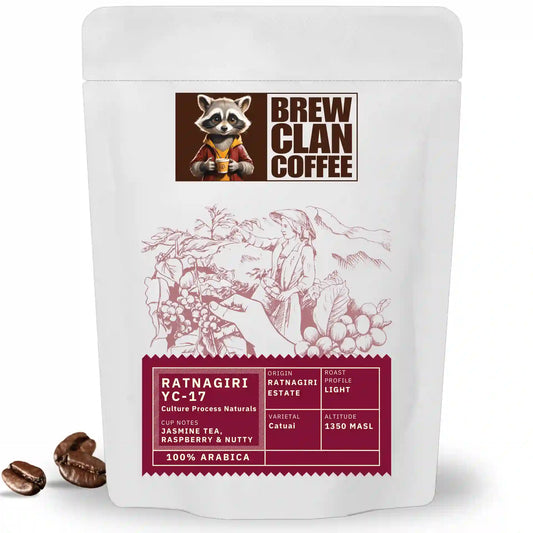
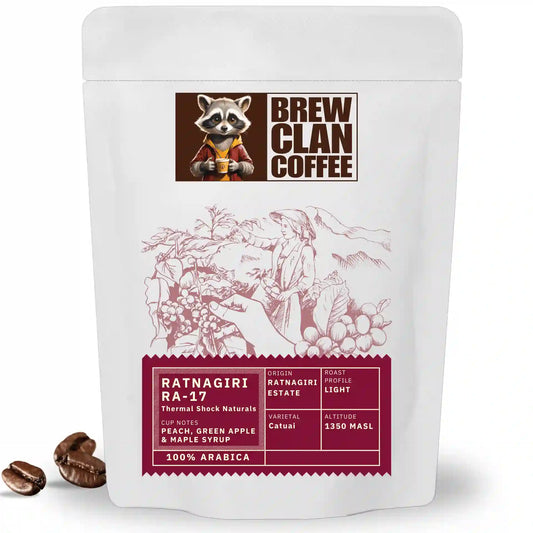
| Ratnagiri RA-17 | Ratnagiri Estate | Thermal Shock Natural | Peach, Green Apple, Maple Syrup | Light |
Every one of these is specialty grade — traceably, verifiably, and genuinely.
→ Shop All BrewClan Specialty Coffees
Frequently Asked Questions
1. What score does a coffee need to be called specialty?
80 points or above on the SCA's 100-point scale, as evaluated by a certified Q Grader. This is the internationally recognised threshold — anything below is commercial grade regardless of how it's marketed.
2. Is all Arabica coffee specialty?
No. Arabica is a species of coffee plant, not a quality grade. Arabica can be commodity-level or specialty-level depending on how it was grown, harvested, processed, and roasted. Robusta is generally not used in specialty coffee, but Arabica alone is not a specialty guarantee.
3. Why does specialty coffee cost more?
Because every step of producing it costs more — selective hand picking, careful processing, rigorous quality control, small-batch roasting, and fast shipping. The price reflects real work and real quality, not a marketing premium.
4. How can I taste the difference between specialty and commercial coffee?
The clearest difference is in the aftertaste and the flavour clarity. Specialty coffee has a clean, pleasant aftertaste that lingers — you can often identify specific flavours. Commercial coffee tends to have a flat, slightly bitter finish that fades quickly and uniformly.
5. Does specialty coffee always taste better?
"Better" is subjective, but specialty coffee always tastes more interesting and more itself. If you've grown up on strong, dark, commercial coffee, specialty might taste unusual at first — especially lighter roasts. Give it a few cups and let your palate adjust. Most people don't go back.
6. Are all single origin coffees specialty grade?
Not necessarily. Single origin means traceable to one source — but that source could still produce commercial-grade coffee. Single origin and specialty are two different (though often overlapping) qualities. At BrewClan, all our coffees are both single origin and specialty grade.