
Specialty Coffee Beans: The Complete Guide (2026)
Share
You've upgraded your grinder. You've dialled in your water temperature. Your technique is solid. And your coffee still tastes... fine. Not great. Not the cup you had at that one specialty café that made you stop mid-sip and think — what is this?
The answer is almost always the beans.
Everything else — the equipment, the technique, the water — is a multiplier. But what you're multiplying matters most. This guide will tell you exactly what specialty coffee beans are, how they differ from what fills most supermarket shelves, and how to choose the right one for the way you actually brew at home.
What Are Specialty Coffee Beans — Really?
The word "specialty" gets used loosely on coffee packaging. Artisan. Premium. Reserve. Single Estate. Most of it is marketing language with no standard behind it.
Specialty coffee has a precise, internationally recognised definition.
The Specialty Coffee Association (SCA) — the global authority on coffee quality — uses a 100-point scoring system. Trained, certified tasters called Q Graders (think of them as sommeliers for coffee) evaluate each lot across ten attributes: aroma, flavour, aftertaste, acidity, body, balance, uniformity, cleanliness, sweetness, and overall impression.
A coffee must score 80 points or above to qualify as specialty grade.
That's the line. Below 80 is commercial grade — what fills most supermarket shelves, regardless of how premium the packaging looks.
The best lots in the world score 90+. Most genuine specialty coffee sits between 80–89. What this means practically: if a coffee doesn't carry a roast date, a named estate, and a specific processing method on the bag — it almost certainly isn't specialty, whatever the label claims.
What Makes Specialty Coffee Beans Taste Different?
The flavour gap between specialty and commercial coffee comes down to five decisions made long before the beans reach your kitchen.
1. Selective Harvesting
Specialty coffee starts with hand-picked cherries — only the ones at peak ripeness, selected individually. Commercial coffee commonly uses strip harvesting, where everything on a branch — ripe, underripe, overripe — gets pulled off at once. Underripe cherries introduce sourness. Overripe ones bring ferment defects. Mixed harvests produce inconsistent, lower-scoring lots that get masked by dark roasting.
2. Careful Processing
After harvest, the cherry must be processed to extract the seed. The method used — washed, natural, or honey — dramatically shapes the final flavour. Specialty producers control this stage meticulously. Commercial producers prioritise speed and volume.
- Washed process: Cherry removed early. Cup is clean, bright, and origin-expressive.
- Natural process: Whole cherry dries intact. Cup is fruity, sweet, and full-bodied.
- Honey process: Partial mucilage left on during drying. Cup sits between the two — silky, sweet, and fruit-forward.
3. Strict Defect Tolerance
The SCA allows a specialty lot a maximum of zero primary defects and no more than five secondary defects per 350g sample. A single black bean, a sour bean, or a pod disqualifies the lot. Commercial coffee tolerates far higher defect counts — they'll be hidden by dark roasting anyway.
4. Altitude and Terroir
Most of the world's best specialty coffee is grown at high altitude — typically above 1,000 MASL (metres above sea level). At altitude, cooler temperatures slow the development of the coffee cherry, allowing more time for sugars and flavour compounds to develop. Lower-grown coffee matures faster and produces a denser, less complex bean.
5. Freshness at the Point of Sale
Specialty coffee is sold close to its roast date — ideally within 2–6 weeks of roasting. Volatile aromatic compounds (the things that make coffee smell and taste the way it should) begin degrading immediately after roasting. Most commercial coffee is 6–12 months old by the time it reaches you. Freshness isn't a bonus feature. It's the difference between a coffee that blooms in your cup and one that tastes flat regardless of technique.
Specialty Coffee Beans by Brew Method
This is where most guides fall short. They tell you what specialty coffee is but not which type works best for how you actually brew. Here's the honest breakdown.
Specialty Coffee for Pour Over
Pour over — V60, Chemex, Kalita Wave — is the most revealing brew method. Paper filters strip oils and fine particles, leaving a clean, transparent cup where every nuance of the bean shows up clearly. This makes it the best method for tasting origin character.
What works best: Light to medium roast, washed or honey processed beans with pronounced acidity and distinct tasting notes. The clarity of pour over is wasted on a dark, low-complexity roast.
Grind: Medium-coarse (coarse sea salt texture) Water temp: 90–94°C Ratio: 1:15 (1g coffee per 15ml water)
Best BrewClan picks for pour over:
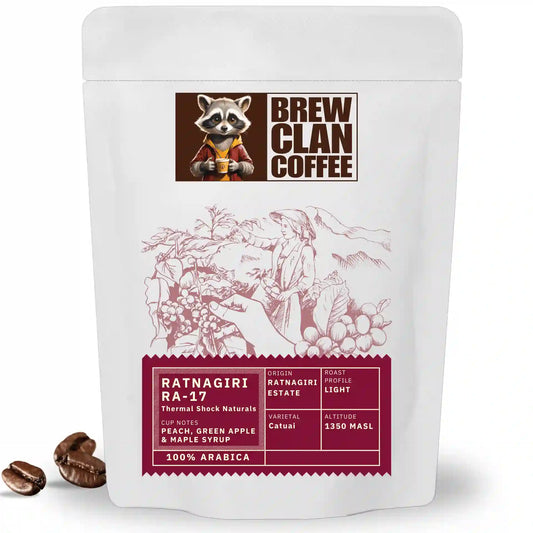
- Ratnagiri RA-17 Thermal Shock Naturals — Peach, green apple, maple syrup. Light roast. Pour over is where this coffee's extraordinary fruit clarity comes alive.
- Unnaki Estate Yellow Honey — Berry, apple, grapefruit. Light roast. The honey process sweetness shines through the clean pour over extraction.
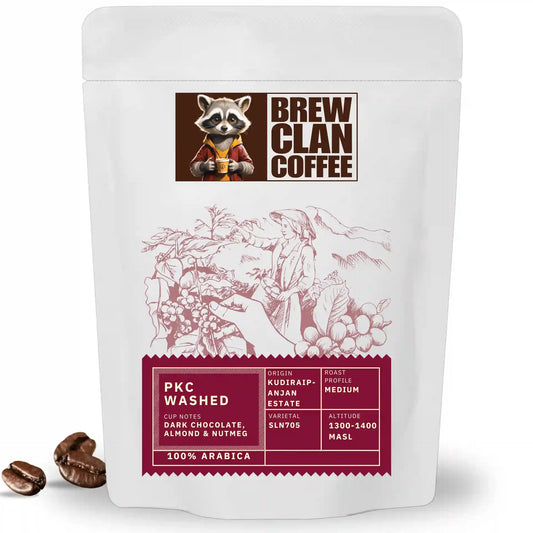
- PKC Kudiraipanjan Estate Washed — Dark chocolate, almond, nutmeg. Medium roast. Washed process gives it the clarity pour over rewards.
Specialty Coffee for Espresso Machine
Espresso is the most demanding brew method — 9 bars of pressure, 25–35 seconds, everything concentrated. It amplifies both the good and the bad in a bean. Stale, low-quality coffee produces a harsh, acrid shot regardless of machine quality. Fresh specialty beans produce a thick, syrupy shot with crema and genuine flavour complexity.
What works best: Medium to medium-dark roast with natural sweetness, full body, and low acidity. A wider extraction window — characteristic of medium-dark roasts — makes dialling in more forgiving.
Grind: Fine Dose: 18–20g in, 36–40g out Shot time: 25–32 seconds Water temp: 91–94°C
Best BrewClan picks for espresso:
- Mysore Nuggets — Chocolate, nutty, cocoa. Medium-dark. One of the most forgiving specialty espresso bases you'll find. Bold, rich, consistent.
- Baarbara Estate Washed AA — Nutty, cocoa, brown sugar. Medium-dark. Cuts beautifully through milk in lattes and cappuccinos.
- PKC Kudiraipanjan Estate Washed — Dark chocolate, almond, nutmeg. Medium. More complex, more demanding — but exceptional as a straight double shot.
Specialty Coffee for Cold Brew
Cold brew uses time instead of heat — typically 16–18 hours of immersion at room temperature or in the fridge. The slow, cold extraction produces a naturally low-acid, sweet, smooth concentrate. Specialty beans make cold brew dramatically better because the low-acid profile of good beans becomes even more pronounced in cold extraction — all the sweetness, none of the harshness.
What works best: Medium to medium-dark roast with chocolate, caramel, or nutty notes. These flavour profiles translate best into cold brew's characteristic smooth sweetness. Very light roasts can taste underwhelming — cold extraction doesn't pull their delicate aromatics as effectively.
Grind: Coarse Ratio: 1:8 for concentrate, 1:12 for ready-to-drink Steep time: 16–18 hours (fridge) or 12–14 hours (room temperature)
Best BrewClan picks for cold brew:
- Mysore Nuggets — The chocolatey, low-acid profile produces a smooth, naturally sweet cold brew.
- C&T Estate Washed AA — Deep cocoa and nuttiness, full body. A rich, satisfying cold concentrate.
- Baarbara Estate Washed AA — Brown sugar sweetness translates exceptionally into a clean, sweet cold brew.
Specialty Coffee for French Press
French press is an immersion method — grounds steep directly in water for 4 minutes, and the metal mesh filter retains all the natural oils. This makes it one of the most flavour-expressive brew methods: the oils carry aroma and body that paper filters strip away. Every quality in the bean shows up amplified.
What works best: Medium to medium-dark roast with full body and natural sweetness. The oil retention of French press rewards richer, heavier roast profiles.
Grind: Coarse Steep time: 4 minutes Water temp: 92–94°C Ratio: 1:15
Best BrewClan picks for French press:
- Mysore Nuggets — Bold, chocolatey, full-bodied. Immersion brewing amplifies the cocoa depth beautifully.
- Udayagiri Estate Whiskey Barrel — Green apple, fermented fruits, black tea. The metal filter retains the barrel-aged oils that define this coffee's complexity.
Specialty Coffee for Drip Coffee Maker
The drip machine is the most democratic brew method — consistent, easy, and capable of producing excellent results with minimal effort when the beans are right. Medium to medium-dark specialty roasts extract reliably at standard drip temperatures (88–96°C) and produce a clean, full-bodied cup.
What works best: Medium to medium-dark roast. Washed or honey processed. The even, automated extraction of a drip machine suits coffees with consistent flavour profiles.
Grind: Medium Ratio: 1:15 to 1:17
Best BrewClan picks for drip:
- Baarbara Estate Washed AA — Reliable, sweet, smooth. A perfect everyday drip coffee.
- C&T Estate Yellow Honey — Pear, peach, walnut. The honey sweetness comes through cleanly in drip extraction.
- Peaberry from Hosahalli Estate — Brown sugar, sweet. Naturally approachable and consistent.
Specialty Coffee for AeroPress
The AeroPress is the most flexible brewing device in specialty coffee. You can brew it fast or slow, hot or cold, concentrated or diluted. It's forgiving of grind inconsistency and produces a clean, rich cup with low bitterness. Specialty coffee shines in an AeroPress because the short brew time and gentle pressure highlight sweetness and clarity without over-extracting harsh compounds.
What works best: Medium roast, light roast, washed or honey processed. The AeroPress handles both with ease.
Grind: Medium-fine Brew time: 1.5–2.5 minutes Water temp: 85–96°C depending on roast
Best BrewClan picks for AeroPress:
- Unnaki Estate Yellow Honey — The fruit brightness and sweetness of this light roast are beautifully concentrated in an AeroPress.
- Ratnagiri RA-17 — Extraordinary in an inverted AeroPress at 88°C — peach and maple syrup in a concentrated, syrupy shot.
Quick Comparison: BrewClan Specialty Coffees at a Glance
| Coffee | Process | Roast | Tasting Notes | Best Brew Methods | Price |
|---|---|---|---|---|---|
| Mysore Nuggets | Washed | Medium-Dark | Chocolate, Nutty, Cocoa | Espresso, French Press, Cold Brew, Drip, Moka Pot | ₹699 |
| Baarbara Estate Washed AA | Washed | Medium-Dark | Nutty, Cocoa, Brown Sugar | Espresso, Drip, French Press, Cold Brew | ₹699 |
| PKC Kudiraipanjan Washed | Washed | Medium | Dark Chocolate, Almond, Nutmeg | Pour Over, Espresso, Drip | ₹749 |
| Peaberry (Hosahalli) | Washed | Medium | Brown Sugar, Sweet | Drip, Pour Over, French Press, AeroPress | ₹549 |
| C&T Estate Yellow Honey | Honey | Medium-Light | Pear, Peach, Walnut | Pour Over, Drip, Cold Brew | ₹699 |
| Unnaki Estate Yellow Honey | Honey | Light | Berry, Apple, Grapefruit | Pour Over, AeroPress, Cold Brew | ₹699 |
| C&T Estate Washed AA | Washed | Medium-Dark | Chocolate, Nutty, Cocoa | French Press, Moka Pot, Espresso, Cold Brew | ₹649 |
| Udayagiri Whiskey Barrel | Barrel-Aged | Medium | Green Apple, Fermented Fruits, Black Tea | Pour Over, French Press | ₹849 |
| Ratnagiri RA-17 | Thermal Shock Natural | Light | Peach, Green Apple, Maple Syrup | Pour Over, AeroPress, Cold Brew | ₹949 |
Why BrewClan Specialty Coffee Beans Are Different
There are plenty of places to buy coffee beans in India. Here's what actually separates BrewClan from the category:
1. Single-origin traceability — every time Every coffee we sell is traceable to a specific, named estate. Not "South Indian Arabica." Not "premium blend." You know the farm, the region, the varietal, and the altitude. This isn't just good storytelling — it's the foundation of specialty grade quality. Unnamed sources can't be held to quality standards. Ours can.
2. Small-batch roasting, shipped fresh We roast in small batches and ship within days. Your beans arrive at peak flavour — not after months in a warehouse. This matters more than almost any other variable. The bloom test is honest: fresh specialty beans puff up dramatically when hot water hits them. Stale beans barely react. If your current coffee doesn't bloom, that's your answer.
3. Genuine tasting notes — not marketing language When we say "peach, green apple, maple syrup" about the Ratnagiri RA-17, those flavours are actually there. They were identified by trained tasters from the bean itself, not written by a copywriter looking for something to say. Every tasting note in our lineup maps to a real, traceable flavour origin — the varietal, the altitude, the processing method that produced it.
→ Shop All BrewClan Specialty Coffee Beans
The One Thing to Remember
Every variable in brewing — your grinder, your water, your technique — is a multiplier. But what you're multiplying is the bean. A ₹15,000 espresso machine cannot fix a mediocre, stale, commercially-processed bean. A ₹2,000 V60 in the hands of someone with fresh, well-sourced specialty coffee will produce a cup that makes people ask where you bought your machine.
Start with the beans. Everything else follows.
If you're ready to taste what Indian specialty coffee is genuinely capable of — start with Mysore Nuggets for something bold and familiar, or Ratnagiri RA-17 if you want to go straight to the deep end.
Both ship fresh. Both deliver free across India. Both will change what you expect from a cup of coffee.
→ Explore the Full BrewClan Lineup
Frequently Asked Questions
What are specialty coffee beans?
Specialty coffee beans are coffees that have scored 80 points or above on the SCA's 100-point quality scale, as evaluated by certified Q Graders. They are traceable to a single origin, processed with care, freshly roasted, and free of the defects that characterise commercial-grade coffee.
What is the best specialty coffee bean for beginners?
Mysore Nuggets or Peaberry from Hosahalli Estate — both have approachable, sweet, chocolatey profiles with low acidity. They're familiar enough not to feel challenging but noticeably better than anything from a commercial blend.
Which specialty coffee bean is best for espresso?
Medium to medium-dark roast washed coffees work best. Mysore Nuggets and Baarbara Estate Washed AA are our top recommendations — wide extraction windows, full body, and natural sweetness that holds up in concentrated extraction.
Can you use specialty coffee beans for cold brew?
Absolutely — and cold brew is one of the best ways to experience specialty coffee's natural sweetness. Medium-dark roasts with chocolate and caramel notes (like Mysore Nuggets or C&T Washed AA) produce exceptionally smooth, sweet cold brew.
What makes Indian specialty coffee different from imported specialty coffee?
Indian specialty coffee — particularly from high-altitude estates in Coorg, Chikmagalur, Yercaud, and the Nilgiris — is characterised by full body, natural low acidity, and deep chocolate and nutty profiles. It's often more approachable than East African or Central American specialty coffees, and significantly more affordable for comparable quality. It's also among the most underrated origins in the global specialty market.
How do I know if my coffee beans are specialty grade?
Look for: a roast date (not just a best-before date), a named estate or farm, a specific varietal, a stated processing method, genuine flavour notes (not vague marketing language like "smooth and bold"), and a price point that reflects real sourcing costs. Specialty coffee in India typically starts at ₹500–600 for 250g.
What is the difference between specialty coffee and regular coffee?
Regular commercial coffee is typically blended from untraced sources, processed quickly for volume, dark-roasted to mask defects, and sold months after roasting. Specialty coffee is single-origin, selectively harvested, carefully processed, freshly roasted in small batches, and held to strict quality standards validated by certified tasters.
Related reads:
- What "Specialty Grade" Actually Means — And How to Spot It
- Natural vs Washed vs Honey Coffee — What's the Difference?
- Best Single Origin Coffee Beans to Buy Online in India
All BrewClan coffees are specialty grade, traceable, small-batch roasted, and shipped fresh across India. Free delivery on all orders.