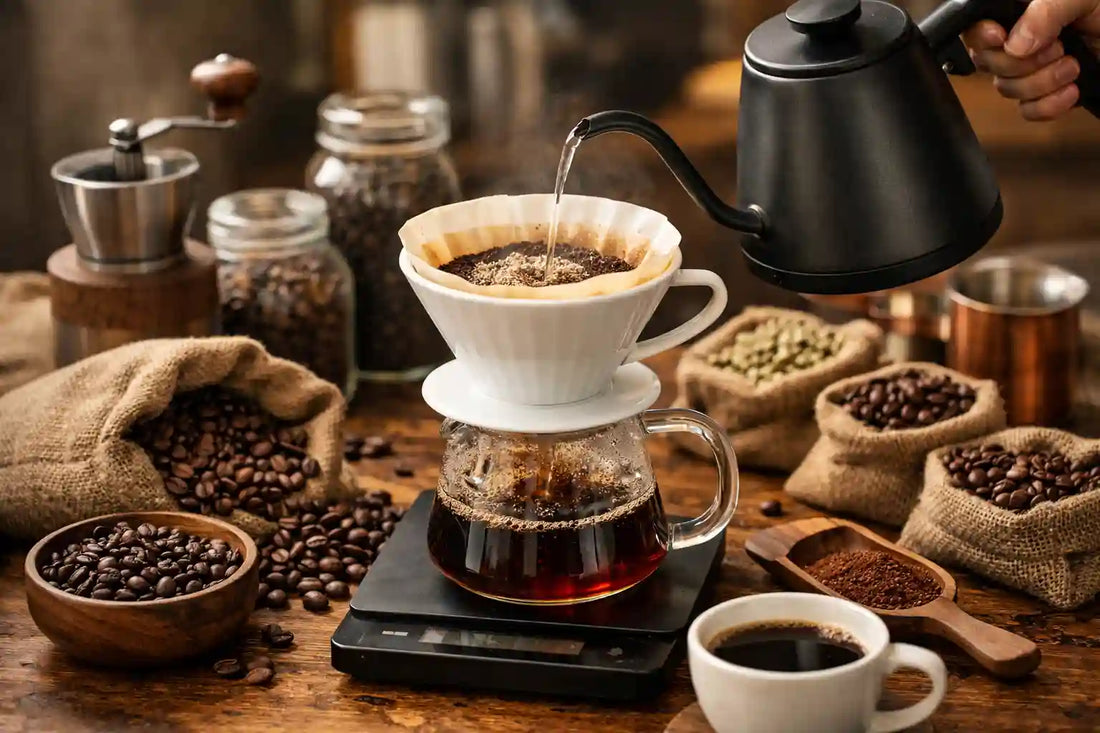
How to Make the Best Pour Over Coffee at Home (Bean Guide Included)
Share
Pour over coffee has a reputation for being complicated. It isn't. What it is, is intentional — you're in control of every variable, and that's exactly what makes it so satisfying when you get it right.
A good pour over is one of the cleanest, most expressive cups you can make at home. The paper filter removes oils and sediment, leaving behind a bright, clear brew that lets the true character of the coffee shine through. If you've ever had a cup and thought "I can actually taste something specific here — is that fruit? Is that chocolate?" — it was probably a pour over.
This guide covers everything: the equipment you need, the technique step by step, the most common mistakes, and most importantly — the beans that make a pour over truly sing.
What You Need to Get Started
You don't need much. Here's the honest list:
Essential:
- A pour over dripper (Hario V60, Chemex, or Kalita Wave — all work well)
- Paper filters (matched to your dripper)
- A kettle — ideally a gooseneck for control, but a regular kettle works too
- A coffee grinder (burr grinder strongly preferred over blade)
- A scale (even a basic kitchen scale works)
- Fresh specialty coffee beans
Nice to have:
- A timer (your phone works)
- A thermometer (target: 90–96°C)
That's it. You don't need a ₹15,000 setup. A V60 costs around ₹800–1,500 and delivers excellent results.
The Perfect Pour Over Recipe
This is a reliable starting point. Once you've nailed it, you can adjust to your taste.
Ratio: 1:15 — 15 grams of coffee to 225ml of water (makes one cup)
Grind size: Medium-coarse (like coarse sea salt)
Water temperature: 92–94°C (bring to boil, rest 30 seconds)
Total brew time: 3 to 3.5 minutes
Step-by-Step Method
Step 1: Boil and Prepare (0:00)
Boil your water and let it rest off the heat for 30–45 seconds. While it's resting, place your filter in the dripper and set it on top of your cup or carafe.
Step 2: Rinse the Filter (0:30)
Pour hot water through the paper filter before adding any coffee. This removes the papery taste the filter can leave in your cup and pre-heats your dripper and vessel. Discard the rinse water.
Step 3: Add Your Coffee (1:00)
Grind 15 grams of fresh beans to a medium-coarse consistency. Add to the rinsed filter and give the dripper a gentle shake to level the grounds.
Step 4: The Bloom (1:15)
This is the most important step. Pour twice the weight of your coffee in water — so 30ml for 15g of coffee — slowly and evenly over the grounds. Start in the centre and spiral outward.
Watch what happens: the grounds will puff up and release CO₂ in a process called degassing. This is called the bloom, and it's your first quality indicator. Fresh coffee blooms dramatically. Stale coffee barely moves.
Let the bloom sit for 30–45 seconds.
Want to go deeper on blooming technique? Read our detailed guide: How to Properly Bloom Your Pour Over Coffee
Step 5: Main Pour (2:00 – 3:00)
Pour the remaining water in slow, steady circles — starting from the centre and spiralling out to the edge, then back in. Don't pour directly onto the filter paper.
Pour in stages rather than one continuous stream. Aim for 3–4 pours total, each one adding 50–60ml. Keep the water level consistent — don't let it drop too low between pours or rise too high.
Step 6: Drain and Enjoy (3:00 – 3:30)
The last of the water should drain through in 3 to 3.5 minutes total. If it's draining too fast (under 2.5 minutes), grind finer next time. Too slow (over 4 minutes)? Go coarser.
Remove the dripper, give your cup a gentle swirl, and taste before adding anything to it. You might be surprised.
The Most Common Pour Over Mistakes (And How to Fix Them)
The cup tastes bitter and harsh Likely over-extracted — either your grind is too fine, water too hot, or you poured too slowly. Try a slightly coarser grind first.
The cup tastes sour, weak, or watery Likely under-extracted — grind finer, use slightly hotter water, or slow down your pour. Sour and weak often come from rushing.
The brew is taking too long (over 4 minutes) Your grind is too fine for your dripper. Go one step coarser.
The bloom isn't happening Your beans aren't fresh. This is the most common culprit. Coffee that's been sitting for months has already off-gassed and won't bloom properly — and won't taste great either. Fresh-roasted beans make a visible difference.
The cup tastes flat and papery You forgot to rinse the filter, or your beans are stale. Always rinse, always use fresh coffee.
The Bean Guide: Best BrewClan Coffees for Pour Over
Pour over is a revealing brew method — it amplifies what's in the bean, both the good and the not-so-good. This makes bean selection more important here than in almost any other method.
Here are the BrewClan coffees that truly shine in a pour over:
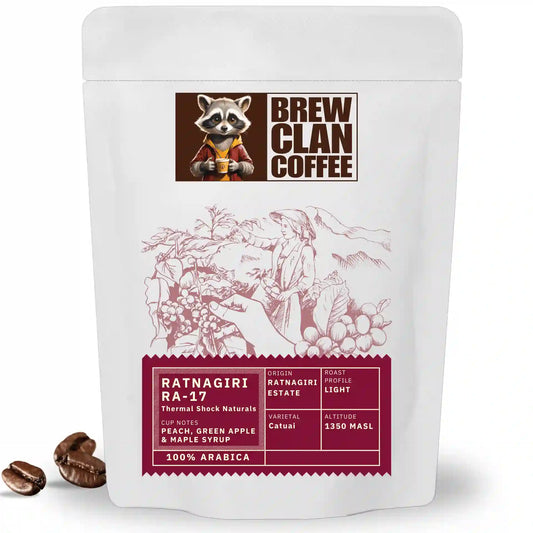
🥇 Best Overall: Ratnagiri Estate RA-17 Thermal Shock Naturals
Tasting Notes: Peach, Green Apple, Maple Syrup | Roast: Light | ₹949
Pour over was made for coffees like this. The RA-17 undergoes a rare thermal shock fermentation — controlled temperature shifts that unlock extraordinary fruit clarity and layered sweetness. In a pour over, where nothing masks the bean's natural character, the result is breathtaking.
You get juicy peach on the first sip, crisp green apple brightness in the mid-palate, and a long, sweet maple syrup finish. Light-roasted to preserve every nuance. Grown at 1350 MASL on the acclaimed Ratnagiri Estate.
Use a water temperature of 90–92°C (slightly lower for light roasts) and a medium-coarse grind. Brew slowly and deliberately — this coffee rewards patience.
🏆 Best for Fruit Lovers: Unnaki Estate Yellow Honey
Tasting Notes: Berry, Apple, Grapefruit | Roast: Light | ₹699
The Unnaki Estate Yellow Honey is one of those coffees that makes pour over feel like a fruit juice experience — in the best possible way. The honey process retains natural fruit sugars from the cherry, and the light roast keeps everything vivid and bright.
Berry sweetness, crisp apple, a splash of grapefruit tartness. Light body, clean finish. Vibrant and lively in the cup. Brewed as a pour over, these flavors have space to fully express themselves in a way they simply can't in espresso or French press.
→ Buy Unnaki Estate Yellow Honey
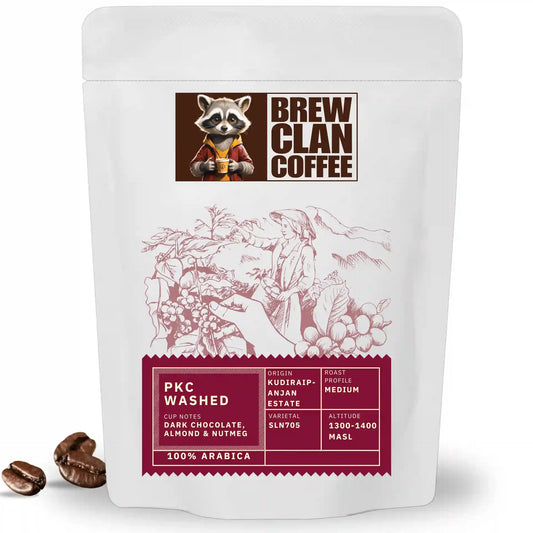
☕ Best for Balanced Complexity: PKC Kudiraipanjan Estate Washed
Tasting Notes: Dark Chocolate, Almond, Nutmeg | Roast: Medium | ₹749
If you prefer a pour over that's rich and warming rather than bright and fruity, the PKC Kudiraipanjan Estate Washed is your coffee. The washed process gives it excellent clarity — perfect for pour over — while the SLN705 varietal delivers depth: dark chocolate upfront, almond nuttiness in the middle, and a gentle nutmeg spice at the finish.
Grown in the Shevaroy Hills at 1300–1400 MASL, this one rewards a slightly longer bloom (45 seconds) and a careful, patient pour.
→ Buy PKC Kudiraipanjan Washed
🍐 Best Medium-Light Option: C&T Estate Yellow Honey
Tasting Notes: Pear, Peach, Walnut | Roast: Medium-Light | ₹699
The C&T Estate Yellow Honey is the most versatile pour over coffee in our lineup — not quite as bold as the washed coffees, not quite as bright as the light roasts. It sits in a beautiful middle ground.
Sweet pear and juicy peach flavors open the cup, followed by a soft walnut warmth in the finish. The honey process adds a silky body that feels luxurious in a pour over. Great for mornings when you want something fruity but not too intense.
🌀 Most Unique: Udayagiri Estate Whiskey Barrel
Tasting Notes: Green Apple, Fermented Fruits, Black Tea | Roast: Medium | ₹849
For the experienced pour over drinker who wants something genuinely unlike anything else. The Udayagiri Whiskey Barrel is aged in seasoned whiskey barrels after harvest, which infuses the beans with extraordinary complexity — oak, dried fruits, a spirit-kissed warmth — all without a drop of alcohol.
In a pour over, the layers unfold slowly as the cup cools: green apple brightness, fermented fruit complexity, and a smooth, elegant black tea finish. Medium-roasted and medium-bodied. Brew slightly cooler (91°C) and allow a full 45-second bloom.
This is the coffee to brew on a slow Sunday morning.
→ Buy Udayagiri Whiskey Barrel
Quick Bean Guide: Pour Over at a Glance
| Coffee | Flavor | Roast | Best For | Brew Temp |
|---|---|---|---|---|
| Ratnagiri RA-17 | Peach, Apple, Maple | Light | Best overall pour over | 90–92°C |
| Unnaki Yellow Honey | Berry, Apple, Grapefruit | Light | Fruit lovers | 91–93°C |
| PKC Kudiraipanjan | Dark Chocolate, Almond, Nutmeg | Medium | Rich, warming cup | 93–94°C |
| C&T Yellow Honey | Pear, Peach, Walnut | Medium-Light | Balanced everyday | 92–93°C |
| Udayagiri Whiskey Barrel | Green Apple, Tea, Oak | Medium | Adventurous sippers | 91–92°C |
Grind Size: The Variable That Changes Everything
If there's one thing to invest in for pour over coffee, it's a burr grinder. Blade grinders chop beans unevenly — you get a mix of dust and boulders in the same batch, which means parts of the coffee over-extract and parts under-extract simultaneously. The result is a cup that's simultaneously bitter and sour — confusing and unpleasant.
A burr grinder crushes beans uniformly to a consistent size. Even an entry-level hand grinder (₹1,500–3,000) makes a dramatic improvement.
For pour over, target medium-coarse — roughly the texture of coarse sea salt or rough sand. If your brew is too slow or bitter, go coarser. If it's too fast or sour, go finer. Adjust in small increments.
Does Water Quality Matter?
More than most people realise. Coffee is 98% water — so the water you use directly shapes the cup.
Hard water (high mineral content) can make coffee taste metallic or chalky. Very soft water can make it taste flat. The sweet spot is water with moderate mineral content — around 150 ppm TDS if you want to get technical.
In practice: if your tap water tastes fine on its own, it'll probably make decent coffee. If it tastes off, use filtered water. A basic Brita-style filter jug is enough.
Why Fresh Beans Change Everything
We've mentioned freshness several times in this guide, and it bears repeating: the bloom test doesn't lie.
Specialty coffee is at its peak flavor from about 5 days to 3–4 weeks after roasting. After that, flavor gradually dulls. By the time most supermarket coffee reaches you, it's often 6–12 months old — which is why it tastes flat no matter how careful your technique is.
At BrewClan, we roast in small batches and ship within days of roasting. Your beans arrive fresh, bloom properly, and taste the way they're supposed to.
Your First Pour Over, Step by Step — Quick Summary
- Boil water, rest 30 seconds
- Rinse filter, discard water
- Add 15g freshly ground coffee (medium-coarse)
- Bloom with 30ml water for 30–45 seconds
- Pour remaining 195ml in 3–4 slow, circular pours
- Total brew time: 3–3.5 minutes
- Taste before adding milk or sugar
Ready to Brew?
The best pour over you'll ever make starts with fresh, high-quality beans. Browse the BrewClan lineup and find the one that sounds most like your kind of cup.
→ Shop All Specialty Coffee Beans
Not sure where to start? The Ratnagiri RA-17 is our top recommendation for pour over, and the PKC Kudiraipanjan Washed is the best choice if you prefer something rich and chocolatey over bright and fruity.
Frequently Asked Questions
What is the best coffee-to-water ratio for pour over?
A 1:15 ratio is a great starting point — 15 grams of coffee to 225ml of water for a single cup. Adjust to taste: more coffee for a stronger cup, less for a lighter one.
What grind size should I use for pour over coffee?
Medium-coarse — roughly the texture of coarse sea salt. Finer grinds slow down extraction and can cause bitterness; coarser grinds speed it up and can cause sourness or weak flavor.
What temperature water should I use for pour over?
92–94°C for medium roasts. Slightly lower (90–92°C) for light roasts, which are more delicate and can taste harsh if brewed too hot.
Why is my pour over taking too long?
Most likely your grind is too fine. Try going one step coarser. If that doesn't help, check that your filter isn't blocking airflow — make sure it's seated properly in the dripper.
What is the best coffee bean for pour over in India?
Light to medium roast, high-quality single origin beans work best. Our top picks are the Ratnagiri RA-17 for fruit-forward complexity and PKC Kudiraipanjan Washed for a rich, chocolatey cup.
Do I need a gooseneck kettle for pour over?
It helps with control and precision, but it's not essential when starting out. A regular kettle works — just pour slowly and carefully. A gooseneck becomes worth it once you're dialing in your technique.
All BrewClan coffees are roasted fresh and shipped across India. Free delivery on all orders.